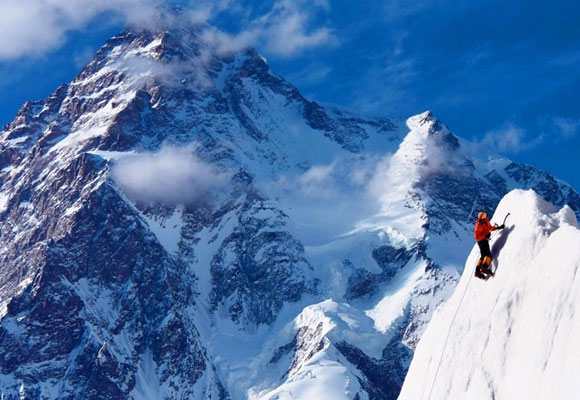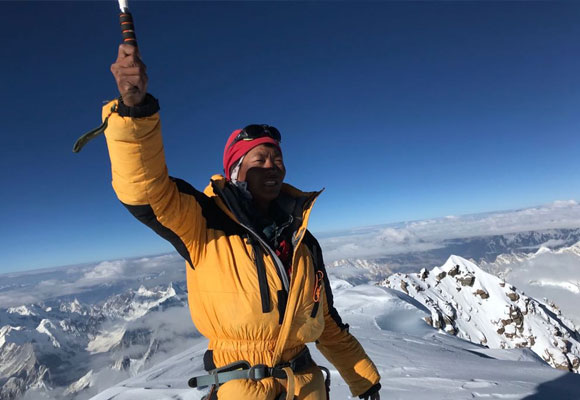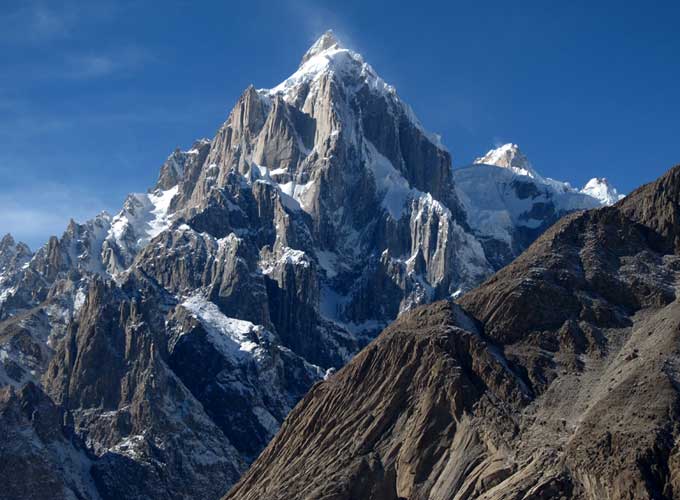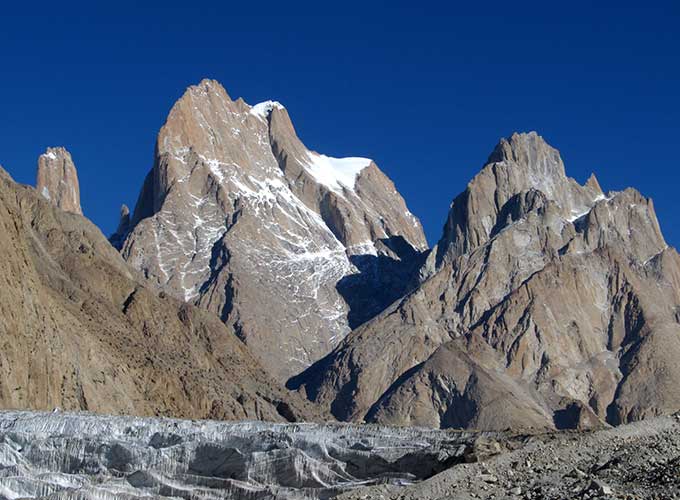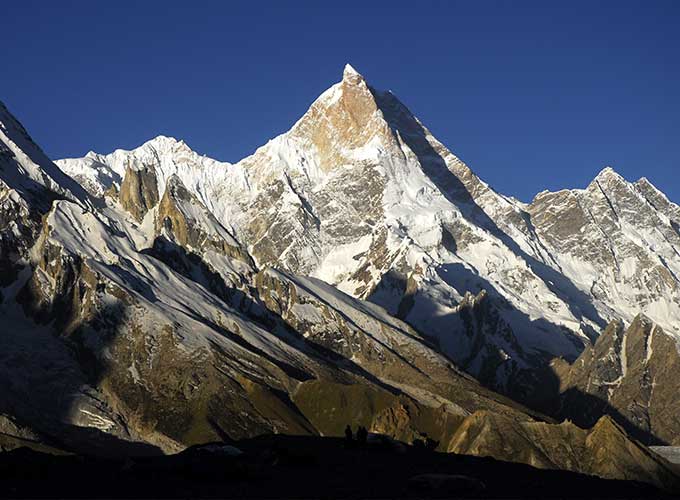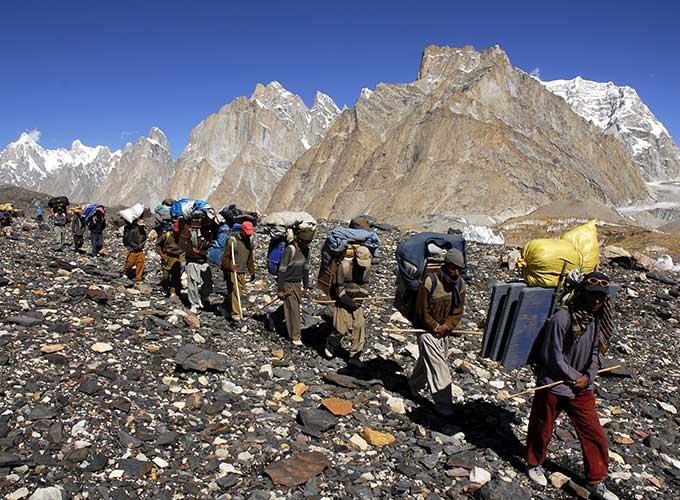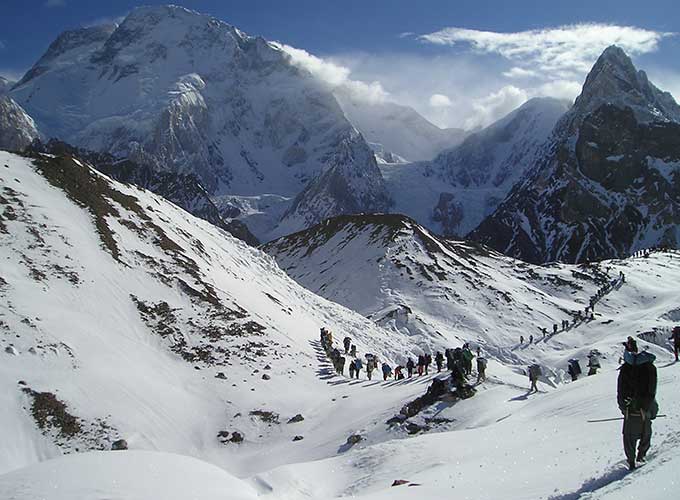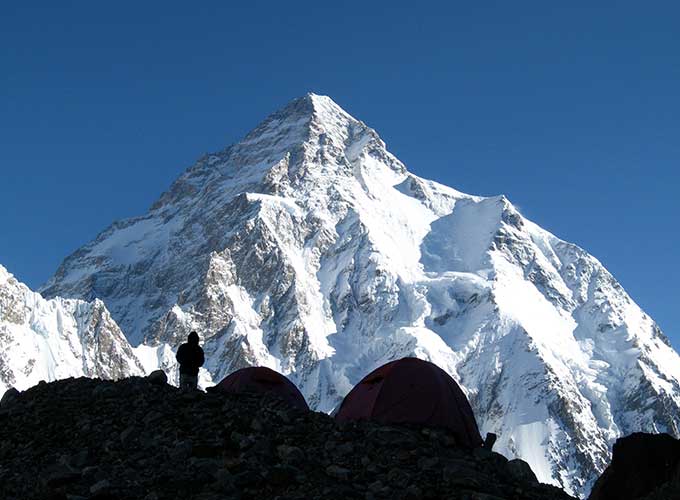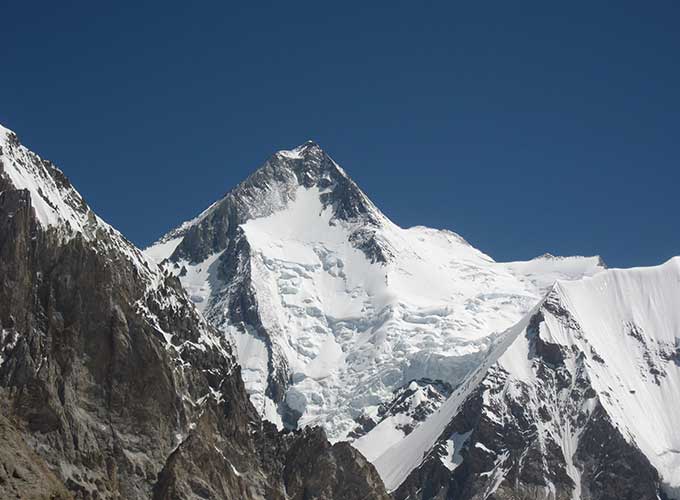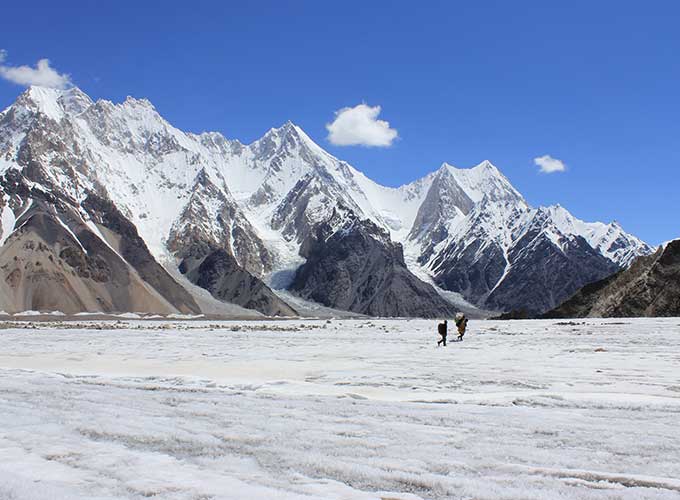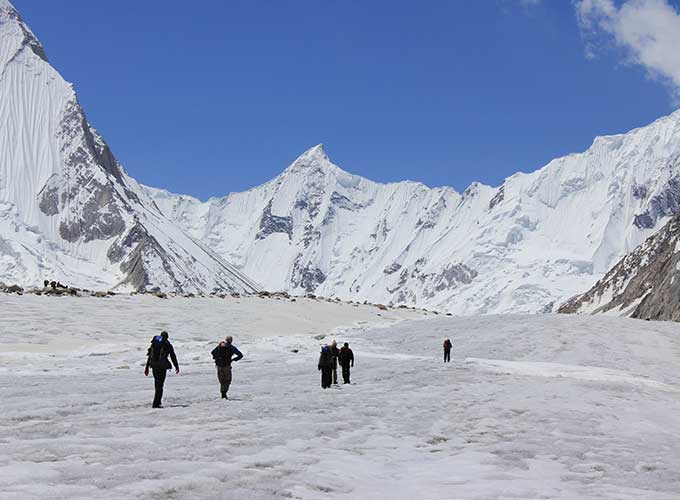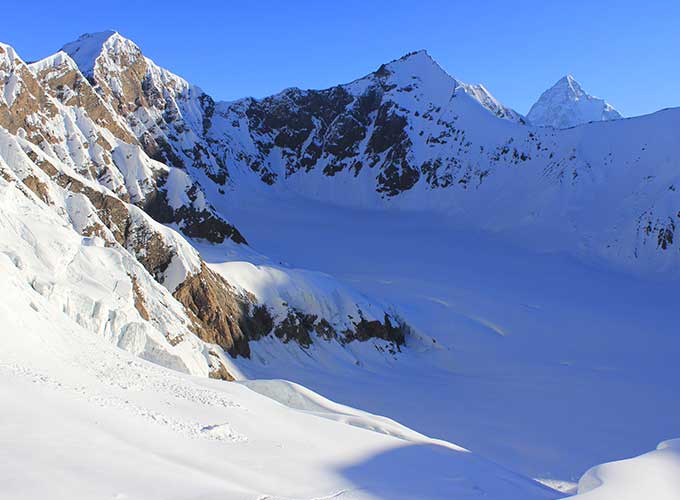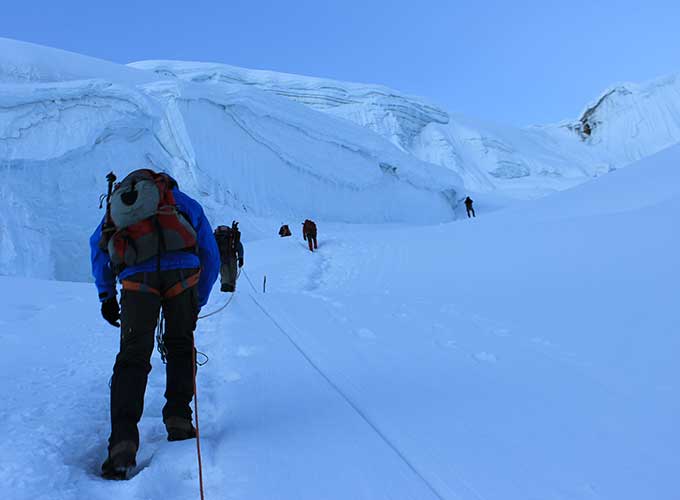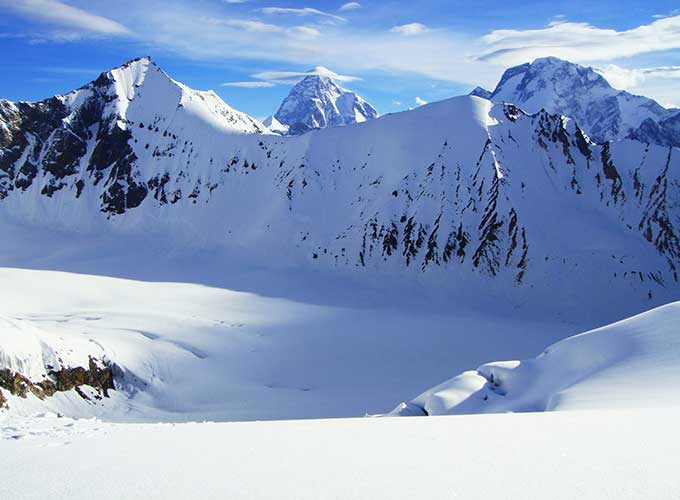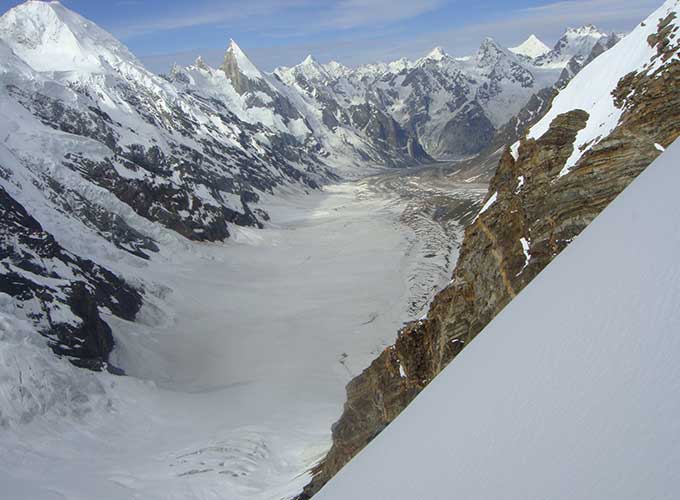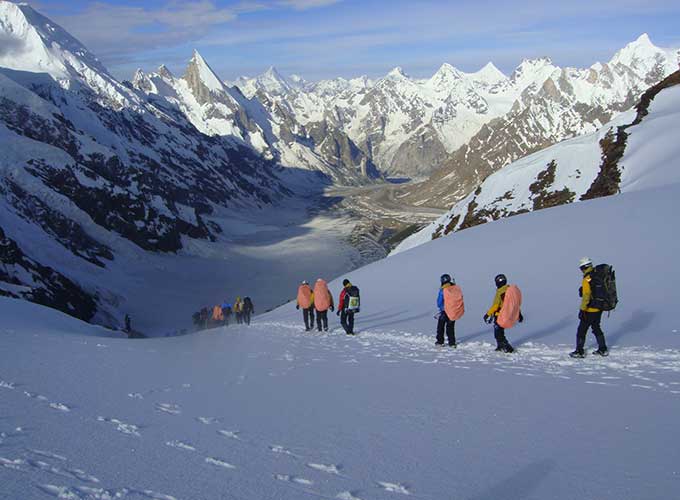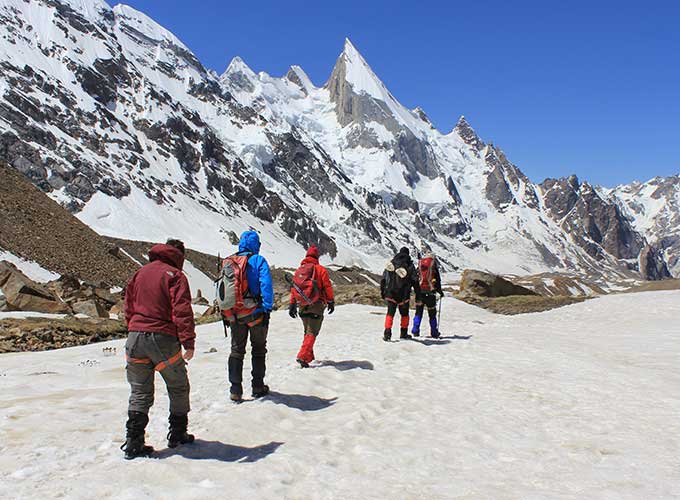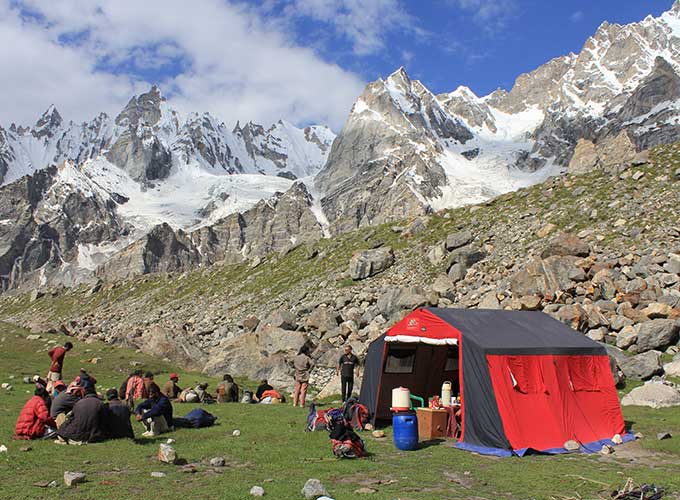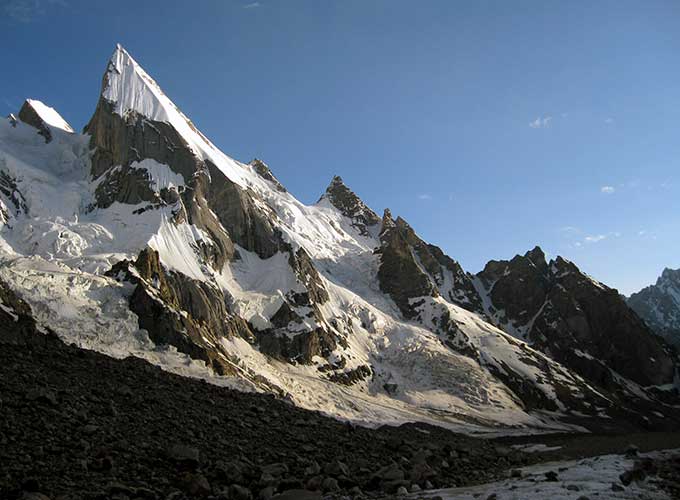
How Hard Is the Trek to K2 Base Camp? What Trekkers Should Know is one of the most important questions for anyone planning a high-altitude adventure in Pakistan. The K2 Base Camp Trek is physically demanding because it combines long trekking days, significant altitude gain, rugged trails, glacier travel, remote camps, and unpredictable mountain weather. It is not a technical climbing expedition to K2 itself, but reaching base camp requires considerably more preparation than an ordinary hiking holiday.
As an Adventure Pakistan market analyst tracking trekking demand and high-altitude travel in Pakistan, I consider K2 Base Camp a challenging expedition-style trek rather than a conventional trail hike. Adventure Pakistan’s current route information describes a journey from Askole through the Baltoro Glacier and Concordia to K2 Base Camp, with the standard program listed at around 20 days.
The difficulty, however, depends on fitness, acclimatization, weather, previous trekking experience, and whether you choose the standard K2 route or add the more demanding Gondogoro La crossing.
Overview | How Hard Is the K2 Base Camp Trek?
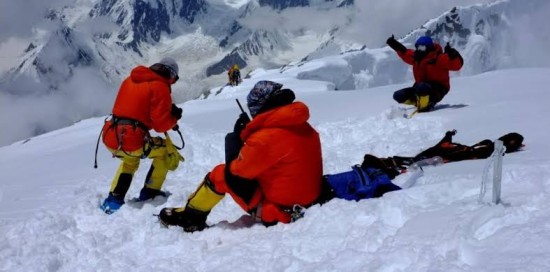
How Hard Is the Trek to K2 Base Camp? The K2 Base Camp Trek is a challenging high-altitude adventure that requires good physical fitness, endurance, and careful acclimatization. The route crosses rugged terrain, rocky trails, and sections of the Baltoro Glacier before reaching K2 Base Camp at around 5,150 meters. Long trekking days, cold weather, limited facilities, and changing mountain conditions add to the difficulty. However, technical climbing skills are generally not required for the standard trek. With proper preparation, suitable equipment, experienced guides, and a gradual itinerary, fit and determined trekkers can complete this remarkable journey through Pakistan’s spectacular Karakoram mountains.
How Hard Is the K2 Base Camp Trek?
The short answer is: K2 Base Camp is hard, but it is achievable for well-prepared trekkers with appropriate fitness and acclimatization.
The route reaches elevations above 5,000 meters, where oxygen availability is substantially lower than at sea level. Adventure Pakistan describes K2 Base Camp as approximately 5,150 meters above sea level.
The challenge comes from several factors working together:
- High altitude
- Long trekking days
- Rocky and uneven terrain
- Glacier travel
- Cold temperatures
- Remote wilderness
- Variable mountain weather
- Limited facilities
- Repeated days of physical exertion
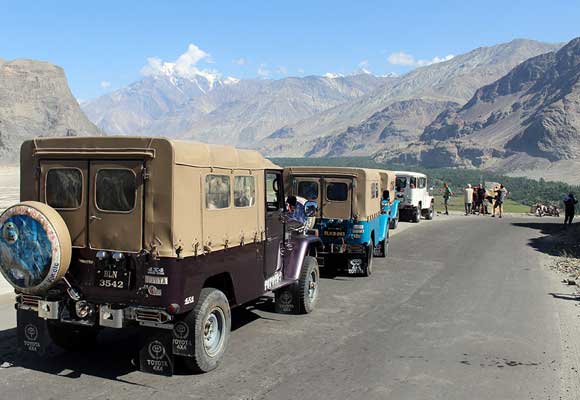
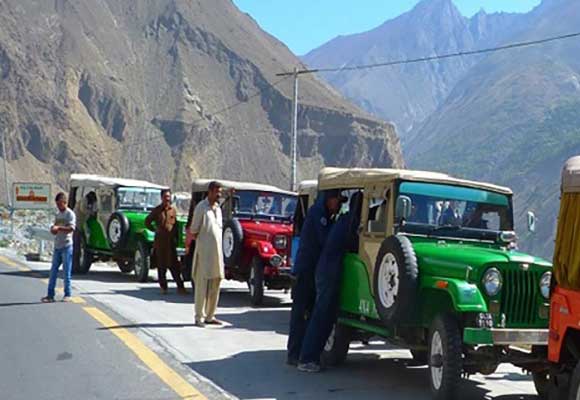
The route normally begins at Askole, the last inhabited settlement before the wilderness section. Trekkers then progress through locations such as Jhola, Paiju, Urdukas, Goro II and Concordia before continuing toward K2 Base Camp.
This means the difficulty is not caused by one exceptionally steep trail. Instead, the cumulative physical and environmental demands make the trek challenging.
What Makes K2 Base Camp So Difficult?
1. High Altitude
Altitude is arguably the biggest challenge.
As trekkers ascend toward Concordia and K2 Base Camp, the atmosphere contains less available oxygen. This can cause headaches, fatigue, reduced appetite, shortness of breath, and other symptoms associated with altitude sickness.
That is why acclimatization should be treated as a fundamental part of the trek rather than an optional extra. A slower ascent gives the body more opportunity to adapt.
The Adventure Pakistan itinerary incorporates acclimatization into the progression toward higher camps.
2. Long Trekking Days
K2 Base Camp is not a short walk from the nearest road.
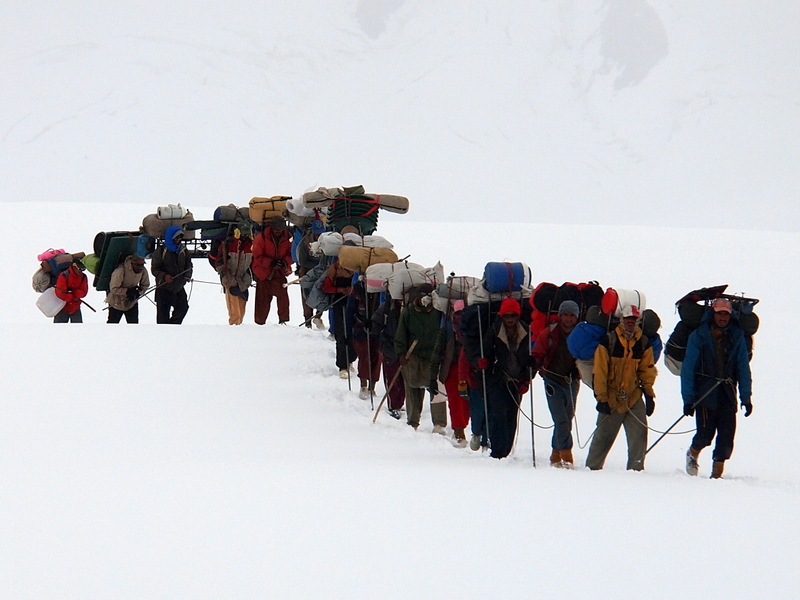
Trekkers spend many consecutive days walking through remote mountain terrain. Some sections require several hours of movement each day, and fatigue can accumulate as the expedition continues.
A person who is comfortable walking for two or three hours on flat ground may still struggle with six or more hours at altitude.
Training should therefore focus on endurance rather than speed.
3. Glacier Terrain
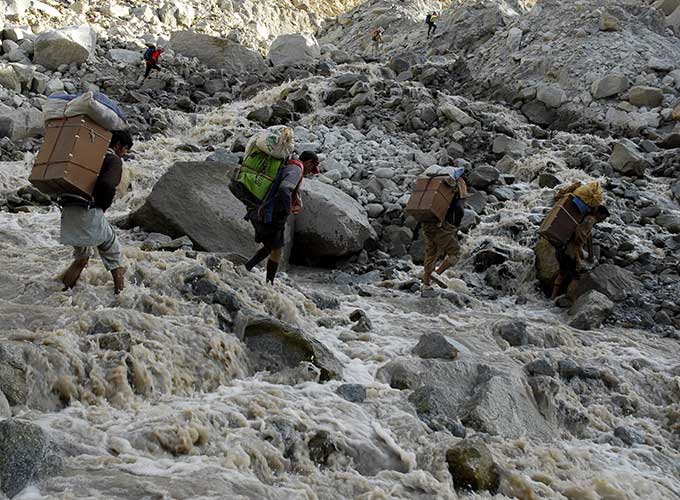
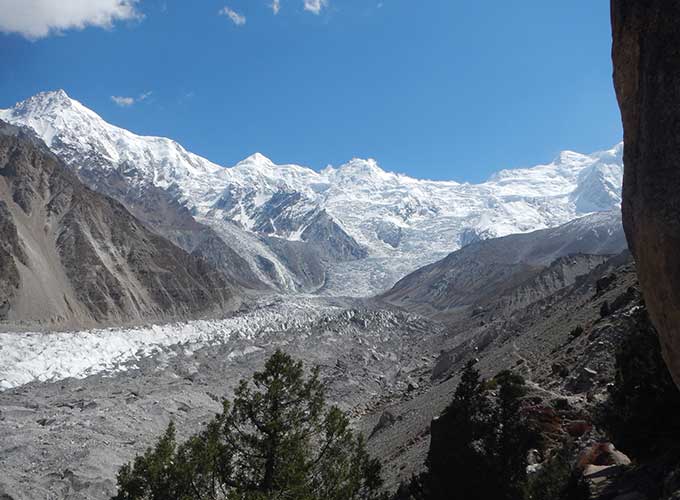
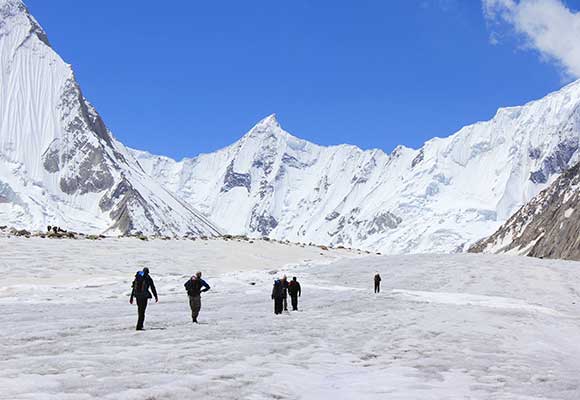
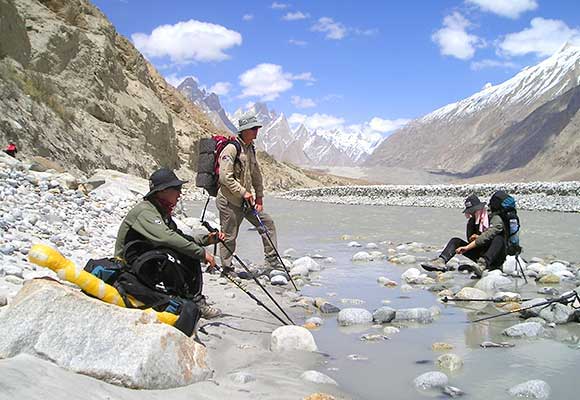
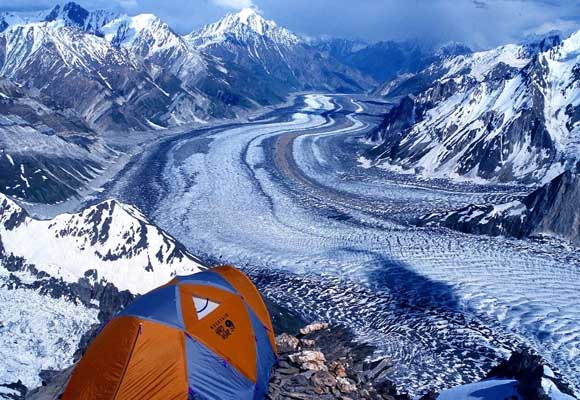
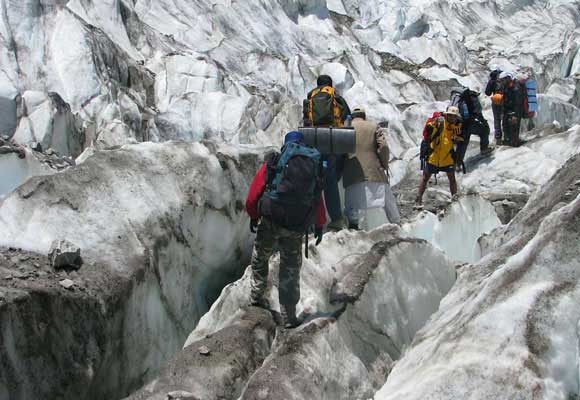
The Baltoro Glacier is one of the defining features of the route. Instead of following a smooth mountain path, trekkers encounter rocky moraine, ice, uneven surfaces, glacial streams, and changing terrain.
Adventure Pakistan identifies the Baltoro Glacier as a central part of the K2 route and describes the progression from Askole toward Concordia and K2 Base Camp.
Walking on glacier terrain requires concentration. Foot placement matters, and trekking poles can provide useful balance on uneven surfaces.
4. Remote Environment
The K2 region is considerably more remote than many popular trekking destinations.
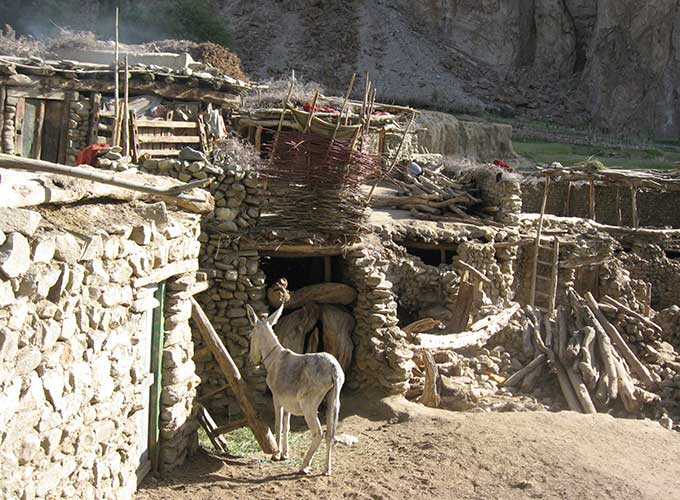
Once the route leaves Askole, access to conventional roads, shops, hotels, and medical facilities becomes very limited. This makes preparation especially important.
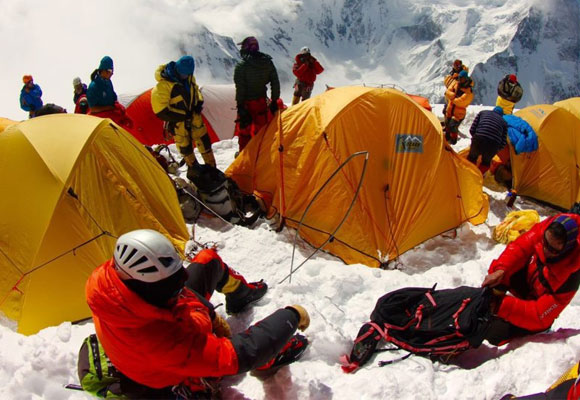
Trekkers need to be comfortable camping and carrying or having porters carry essential equipment for an extended period.
5. Weather
Karakoram weather can change quickly. Cold temperatures, wind, precipitation, snow, and poor visibility can affect trekking conditions.
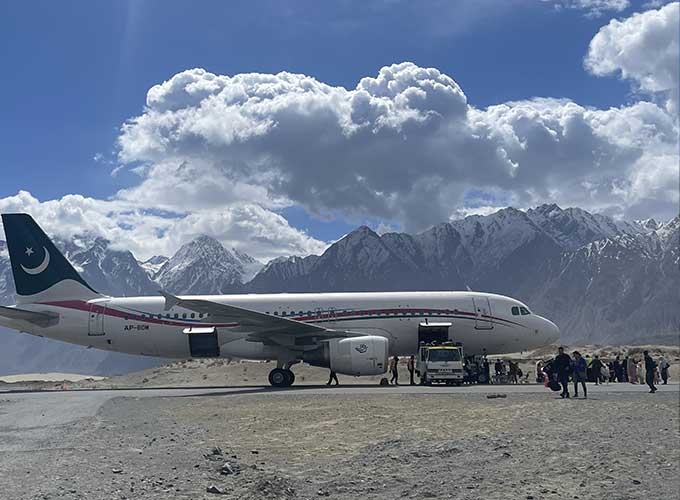
Weather can also influence transport arrangements and flight schedules. Adventure Pakistan notes that its K2 program includes road alternatives when domestic flights are cancelled because of weather.
This is one reason trekkers should avoid building an extremely tight travel schedule around the expedition.
How Fit Do You Need to Be for K2 Base Camp?
You do not need to be a professional mountaineer to trek to K2 Base Camp, but you should have good cardiovascular endurance, leg strength, and mental resilience.
A suitable training program should ideally begin several months before departure.
Cardiovascular Training
Walking, hiking, cycling, running, stair climbing, and similar activities can improve cardiovascular endurance.
The objective is not to become the fastest person in the group. The objective is to maintain steady effort for several hours.
Strength Training
Strong legs and core muscles can make long trekking days easier.
Useful exercises include:
- Squats
- Lunges
- Step-ups
- Calf raises
- Core exercises
- Controlled uphill walking
Training with a backpack can also help the body adapt to carrying trekking equipment.
Hiking Practice
Long weekend hikes are particularly useful because they allow you to experience prolonged physical effort.
If possible, practice hiking on uneven terrain and gradually increase duration and elevation.
Is K2 Base Camp Harder Than Everest Base Camp?
The comparison is not completely straightforward because the two treks have different routes, environments, logistics, and itineraries.
However, K2 Base Camp is widely regarded as a more remote and rugged trekking experience. The Baltoro Glacier, rough moraine terrain, remote camps, and limited infrastructure contribute to the challenge.
The K2 route also provides a more expedition-style wilderness experience rather than a highly developed trekking corridor.
Adventure Pakistan describes the K2 route as remote and less commercialized, with the trek passing through the Baltoro Glacier and Concordia.
Therefore, someone who has completed Everest Base Camp should not automatically assume K2 Base Camp will feel easy. Previous high-altitude experience is useful, but preparation is still essential.
What About the K2 and Gondogoro La Trek?
For experienced trekkers looking for an even greater challenge, the K2 and Gondogoro La Trek Pakistan 2026 adds the Gondogoro La crossing to the K2 journey.
This is significantly more demanding than the standard K2 Base Camp route.
Adventure Pakistan lists Gondogoro La at roughly 5,610 meters in its itinerary and describes an early start followed by a steep ascent and descent.
The pass involves glacier terrain, steep sections, and rope-assisted movement. It should therefore be considered an advanced high-altitude trekking challenge, not simply an extension of an ordinary hiking route.
For trekkers without appropriate experience, the standard K2 Base Camp route may be the more suitable objective.
What Is the Best Way to Prepare?
Preparation should cover four areas: fitness, altitude, equipment, and mindset.
Fitness Preparation
Begin training well in advance.
A practical weekly routine can include:
- 3–4 cardiovascular sessions
- 2 strength sessions
- 1 longer hike
- Gradually increasing elevation
- Regular recovery days
Consistency matters more than extreme workouts.
Altitude Preparation
You cannot completely train your body at sea level to eliminate altitude-related problems. Proper acclimatization during the trek remains essential.
Follow the itinerary’s planned ascent and communicate with your guide if you feel unwell.
Never attempt to push through serious altitude symptoms simply to maintain the schedule.
Equipment Preparation
Appropriate equipment is essential for the Karakoram.
Important items include:
- Proper trekking boots
- Warm layered clothing
- Waterproof outer layers
- Gloves
- Hat and sun protection
- Sunglasses
- Sleeping bag suitable for expected conditions
- Trekking poles
- Headlamp
- Water bottles or hydration system
- Personal medication
- Basic first-aid supplies
- Backpack or duffel suitable for expedition logistics
Your exact equipment list should be based on the season and operator’s recommendations.
K2 Base Camp Trek Planning and Cost
For travelers researching a K2 Base Camp Tour, choosing an experienced operator can simplify permits, transportation, accommodation, meals, porters, camping equipment, and route logistics.
Start |
End |
Status |
Price |
Deposit |
Registration |
|---|---|---|---|---|---|
19 May |
07 June |
Guaranteed |
$2100 |
$300 |
|
27 May |
15 June |
Guaranteed |
$2100 |
$300 |
|
03 June |
22 June |
Guaranteed |
$2100 |
$300 |
|
09 June |
28 June |
Guaranteed |
$2100 |
$300 |
|
16 June |
05 July |
Guaranteed |
$2100 |
$300 |
|
23 June |
12 July |
Limited Space |
$2100 |
$300 |
|
30 June |
19 July |
Limited Space |
$2100 |
$300 |
|
07 July |
26 July |
Guaranteed |
$2100 |
$300 |
|
09 July |
28 July |
SOLD OUT |
$2100 |
$300 |
|
14 July |
02 Aug |
Guaranteed |
$2100 |
$300 |
|
21 July |
09 Aug |
Guaranteed |
$2100 |
$300 |
|
28 July |
16 Aug |
Guaranteed |
$2100 |
$300 |
|
06 Aug |
25 Aug |
Guaranteed |
$2100 |
$300 |
|
13 Aug |
01 Sep |
SOLD OUT |
$2100 |
$300 |
|
18 Aug |
06 Sep |
Guaranteed |
$2100 |
$300 |
|
25 Aug |
13 Sep |
Guaranteed |
$2100 |
$300 |
|
02 Sept |
21 Sept |
Guaranteed |
$2100 |
$300 |
|
02 Sept |
21 Sept |
Guaranteed |
$2100 |
$300 |
|
09 Sept |
28 Sept |
Guaranteed |
$2100 |
$300 |
|
16 Sept |
05 Oct |
Guaranteed |
$2100 |
$300 |
|
23 Sept |
12 Oct |
Guaranteed |
$2100 |
$300 |
|
30 Sept |
19 Oct |
Guaranteed |
$2100 |
$300 |
|
07 Oct |
26 Oct |
Guaranteed |
$2100 |
$300 |
|
14 Oct |
02 Nov |
Guaranteed |
$2100 |
$300 |
|
21 Oct |
09 Nov |
Guaranteed |
$2100 |
$300 |
|
28 Oct |
16 Nov |
Guaranteed |
$2100 |
$300 |
|
04 Nov |
23 Nov |
Guaranteed |
$2100 |
$300 |
|
06 Dec |
25 Dec |
Guaranteed |
$2100 |
$300 |
|
08 Dec |
27 Dec |
Guaranteed |
$2100 |
$300 |
A reputable K2 Base Camp Tour Company should clearly explain what is included and excluded from its package.
When comparing K2 Base Camp Tour Cost, look beyond the headline price. Transport, trekking permits, accommodation, meals, porters, camping equipment, domestic flights, and contingency arrangements can all affect the total cost.
Similarly, the K2 Base Camp Price should be evaluated alongside the services included.
A properly structured K2 Base Camp Tour Package can make remote trekking logistics substantially easier to manage.
Adventure Pakistan currently lists a 20-day K2 Base Camp program from $2,100 and specifies services including trekking permits, domestic airfare, accommodation, meals during the trek, porter baggage allowance, and camping equipment.
Prices and inclusions can change, so travelers should confirm current details before booking.
K2 Base Camp Trek Itinerary — 20 Days
Days 1–10
Day 1: Arrival in Islamabad
Arrive in Islamabad and transfer to your hotel. Meet the trekking team, complete a briefing, and prepare your equipment for the journey into the Karakoram.
Day 2: Islamabad to Skardu
Take a domestic flight to Skardu, weather permitting. Enjoy views of the Himalayan and Karakoram mountain ranges. After arrival, transfer to the hotel and rest.
Day 3: Skardu Sightseeing & Trek Preparation
Spend the day exploring Skardu and completing final preparations. Check trekking equipment, meet staff and porters, and prepare for the road journey toward Askole.
Day 4: Skardu to Askole
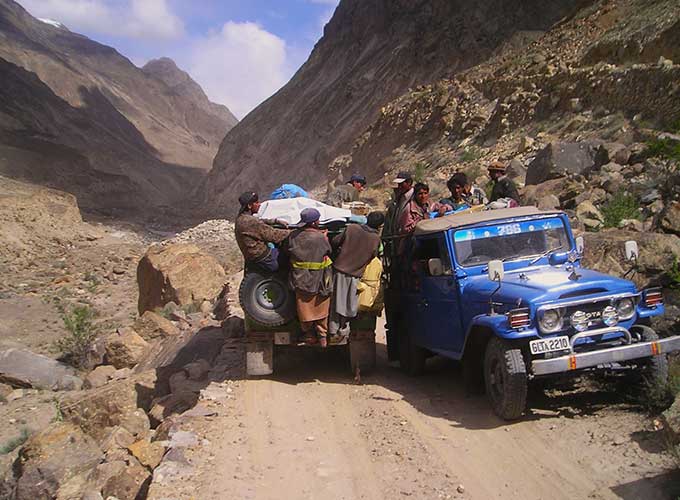
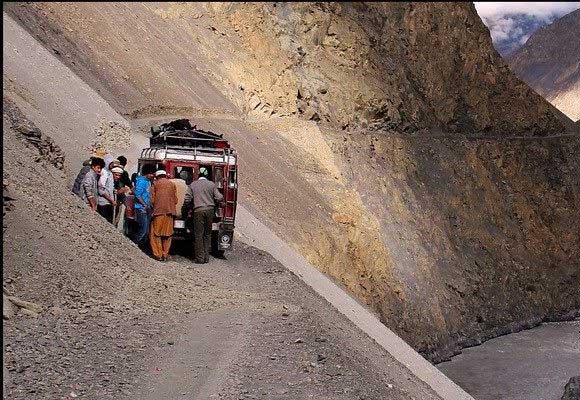
Drive toward Askole, passing through rugged valleys and spectacular mountain scenery. Askole is the traditional gateway for several major Karakoram treks. Overnight at camp.
Day 5: Askole to Jhola
Begin trekking toward Jhola. The trail enters increasingly remote terrain with dramatic views of the surrounding mountains. Continue along the Braldu Valley and camp near Jhola.
Day 6: Jhola to Paiju
Trek along the Braldu River toward Paiju. The landscape becomes more dramatic as the route approaches the Baltoro Glacier region. Camp at Paiju.
Day 7: Paiju to Khoburtse
Continue toward the Baltoro Glacier. The trail becomes more rugged, with spectacular views of the Karakoram peaks. Reach Khoburtse and settle into camp.
Day 8: Khoburtse to Urdukas
Trek along the Baltoro Glacier toward Urdukas. This section offers outstanding mountain scenery, including views toward some of the region’s famous granite peaks. Overnight at Urdukas.
Day 9: Urdukas to Goro II
Continue across the Baltoro Glacier toward Goro II. The surroundings become increasingly alpine, with glaciers and towering peaks dominating the landscape. Camp at Goro II.
Day 10: Goro II to Concordia
Trek toward Concordia, one of the highlights of the K2 Base Camp journey. The meeting point of several major glaciers provides spectacular panoramic views of the Karakoram. Overnight at Concordia.
Days 11–20
Day 11: Concordia to Broad Peak Base Camp
Continue from Concordia toward Broad Peak Base Camp. The trail follows the glacier toward one of the world’s highest mountains. Enjoy views of Broad Peak and surrounding Karakoram giants before camping near the base camp.
Day 12: Broad Peak Base Camp to K2 Base Camp
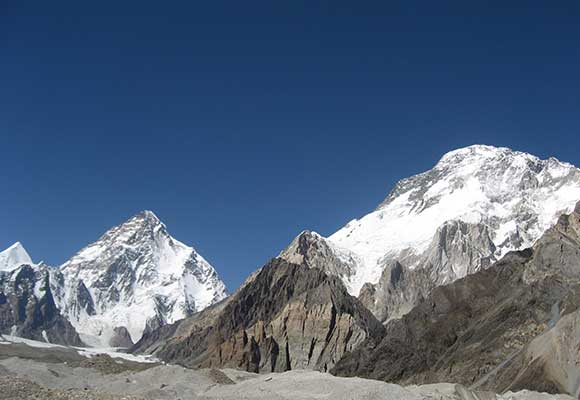
Trek toward the legendary K2 Base Camp, following the glacier and rocky terrain. Reach approximately 5,150 meters and take time to appreciate views of K2 and the surrounding peaks. Return to the designated camp area for the night.
Day 13: K2 Base Camp to Concordia
Begin the return journey from K2 Base Camp toward Concordia. Descending allows the body to recover from the higher altitude. Enjoy familiar views of the Baltoro Glacier and surrounding peaks.
Day 14: Concordia to Goro II
Retrace the route across the Baltoro Glacier toward Goro II. The descent remains physically demanding, but lower elevations generally make breathing and walking more comfortable.
Day 15: Goro II to Urdukas
Continue across the Baltoro Glacier toward Urdukas. Enjoy changing views of the surrounding peaks as the trail gradually loses elevation. Camp overnight at Urdukas.
Day 16: Urdukas to Paiju
Descend from Urdukas toward Paiju. The landscape gradually becomes greener and warmer as the route moves away from the upper glacier environment. Overnight at Paiju.
Day 17: Paiju to Jhola
Continue trekking toward Jhola along the Braldu Valley. This is another long day on the trail, but the decreasing altitude makes the conditions more comfortable than the upper sections.
Day 18: Jhola to Askole and Drive to Skardu
Complete the final trekking section to Askole. From there, meet the transport team and begin the drive back toward Skardu. Overnight in Skardu, depending on arrival time.
Day 19: Skardu to Islamabad
Fly from Skardu to Islamabad, weather permitting. After arrival, transfer to the hotel and enjoy a well-earned rest following the expedition.
Day 20: Departure from Islamabad
Transfer to Islamabad International Airport for your onward journey. The K2 Base Camp adventure officially concludes with departure from Pakistan.
FAQs
How hard is the trek to K2 Base Camp?
The K2 Base Camp Trek is considered challenging because of high altitude, long trekking days, glacier terrain, remote conditions, and unpredictable weather. It is achievable for well-prepared trekkers with good fitness and appropriate acclimatization.
Do I need mountaineering experience?
Technical climbing experience is not normally required for the standard K2 Base Camp Trek. However, trekking experience, physical fitness, altitude awareness, and preparation are strongly recommended.
How high is K2 Base Camp?
K2 Base Camp is approximately 5,150 meters above sea level according to Adventure Pakistan’s current trek information.
Is K2 Base Camp harder than Gondogoro La?
The standard K2 Base Camp route and Gondogoro La route have different challenges. Gondogoro La adds a steep, high-altitude pass crossing and is considered an advanced option. Adventure Pakistan’s itinerary places the pass at approximately 5,610 meters.
How many days does the K2 Base Camp Trek take?
Adventure Pakistan currently lists a 20-day K2 Base Camp program.
What is the most difficult part of K2 Base Camp?
Altitude, cumulative fatigue, glacier terrain, long walking days, and remote conditions are among the biggest challenges. Individual difficulty varies depending on fitness and acclimatization.
Can beginners do the K2 Base Camp Trek?
A person new to high-altitude trekking should not underestimate the route. Beginners who are physically fit may be able to prepare for it, but guided support, appropriate training, and realistic expectations are important.
What training is best for K2 Base Camp?
Build cardiovascular endurance, leg strength, core strength, and hiking experience. Long uphill walks and hikes carrying a suitable backpack are particularly useful.
Is Gondogoro La suitable for everyone?
No. The Gondogoro La crossing is substantially more demanding than the standard K2 Base Camp route. It involves high altitude, steep terrain, glacier travel, and rope-assisted sections.
How Long Does K2 Base Camp Take?
The duration varies depending on the itinerary and weather conditions.
Adventure Pakistan currently lists its K2 Base Camp Trek at 20 days, including the broader travel and trekking program.
The actual walking section is only one component of the expedition. Travel to Skardu, road transportation, acclimatization, rest periods, and return logistics all need to be considered.
This longer format is useful because rushing a high-altitude trek can increase fatigue and reduce the time available to respond to changing conditions.
Other Challenging Treks in Pakistan
K2 Base Camp is not the only major trekking adventure in northern Pakistan.
Snow Lake trek
The Snow Lake trek combines the Biafo and Hispar glacier systems and crosses Hispar La. Adventure Pakistan lists the trek at 22 days, with Hispar La reaching approximately 5,128 meters.
Travelers researching a Snow Lake trek Tour, Snow Lake trek Tour Company, Snow Lake trek Tour Cost, Snow Lake trek Price, or a Snow Lake trek Package should expect a demanding glacier expedition.
Rakaposhi base camp Hunza valley trek
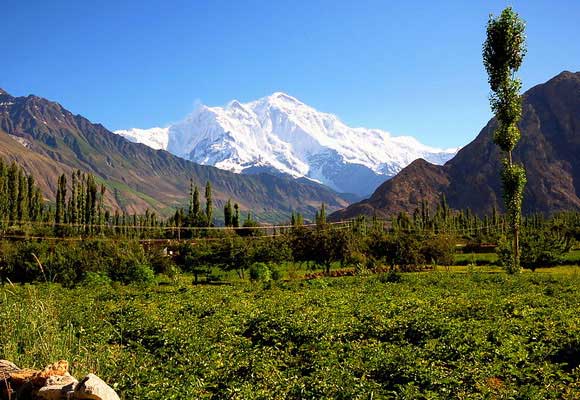
The Rakaposhi base camp Hunza valley trek provides a different high-altitude experience in the Hunza region, with impressive views toward Rakaposhi.
It can be an attractive alternative for travelers who want a major mountain trek without committing to the full remoteness and duration of K2 Base Camp.
Fairy Meadows Trek
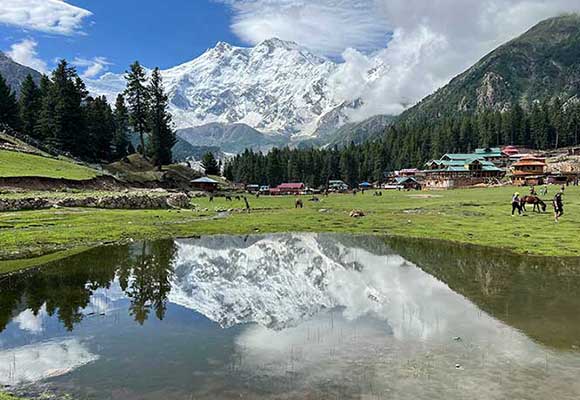
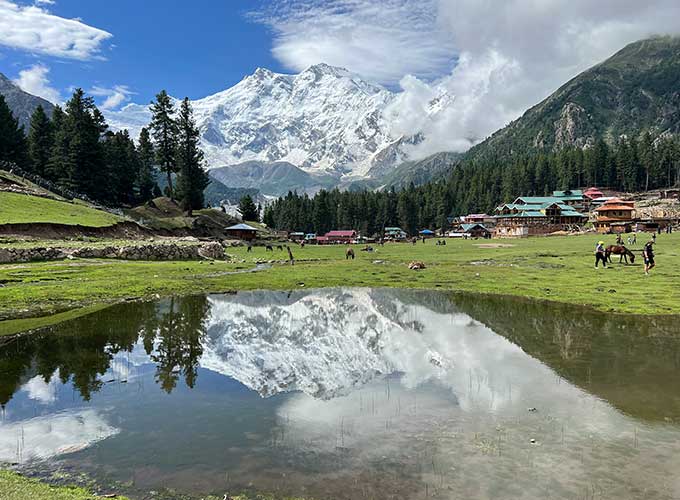
The Fairy Meadows Trek offers a shorter and more accessible way to experience the dramatic mountain landscapes of northern Pakistan.
Travelers can also explore a Fairy Meadows Trek Tour, compare a Fairy Meadows Trek Tour Company, and research Fairy Meadows Trek Cost, Fairy Meadows Trek Price, and a Fairy Meadows Trek Package.
Cultural Experiences Beyond Trekking
Pakistan’s northern travel opportunities extend beyond mountain trails.
An Indus valley civilization tour can introduce travelers to the country’s ancient archaeological heritage.
For cultural tourism, the Shandoor Polo festival provides an opportunity to experience one of the region’s best-known high-altitude polo events.
Travelers can research a Shandoor Polo festival tour, Shandoor Polo festival tour Company, Shandoor Polo festival Cost, Shandoor Polo festival Price, or a Shandoor Polo festival tour Package.
The kalash festival tour offers another cultural dimension, allowing visitors to experience the distinctive traditions and festivals of the Kalash communities.
Who Should Attempt K2 Base Camp?
K2 Base Camp is best suited to people who are physically prepared, comfortable with long trekking days, and willing to spend considerable time in remote mountain environments.
It is particularly suitable for:
- Experienced hikers
- High-altitude trekking enthusiasts
- Physically fit adventure travelers
- People comfortable with camping
- Trekkers prepared for changing weather
- Travelers willing to follow acclimatization schedules
It is less suitable for someone who has no hiking experience and expects a conventional sightseeing holiday.
Most importantly, previous trekking experience is helpful but does not guarantee success. Fitness, acclimatization, weather, health, and group support all influence the outcome.
So, how hard is the trek to K2 Base Camp? It is a challenging high-altitude trek that demands preparation, endurance, patience, and respect for the mountain environment. The difficulty comes from the combination of altitude, long trekking days, glacier terrain, remote camps, weather, and cumulative fatigue rather than from technical climbing alone.
The standard K2 Base Camp Trek is achievable for properly prepared trekkers, while the Gondogoro La extension raises the technical and physical demands considerably. Adventure Pakistan’s current itineraries show why acclimatization and gradual progression are central to the experience.
For travelers planning their first major Karakoram adventure, preparation should begin well before arriving in Pakistan. Build endurance, practice long hikes, strengthen your legs, choose suitable equipment, and allow sufficient time for acclimatization.
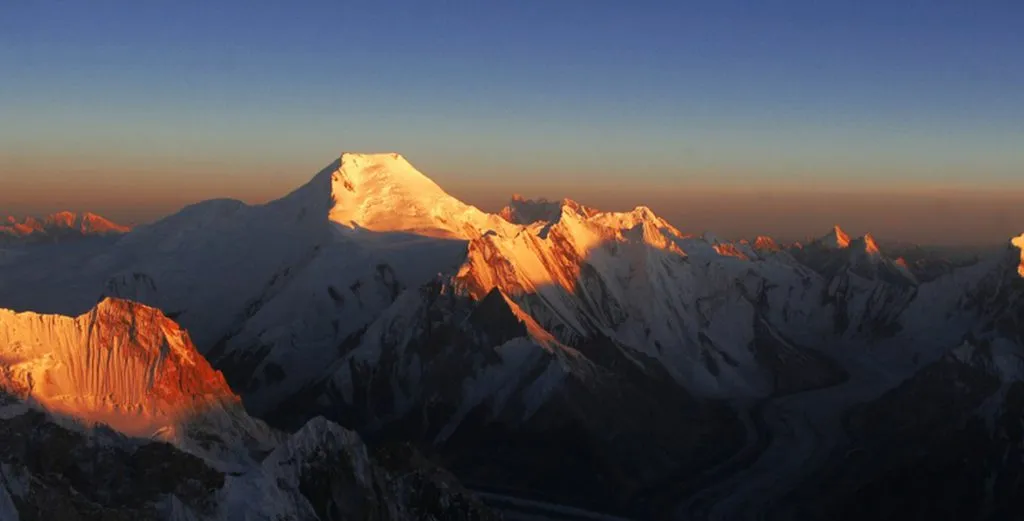
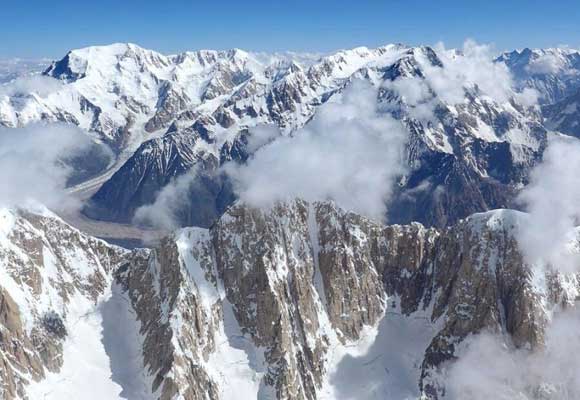
K2 Base Camp is difficult—but that difficulty is also part of what makes the journey extraordinary. The Baltoro Glacier, Concordia, enormous Karakoram peaks, remote wilderness, and sight of K2 create an experience that goes far beyond an ordinary hiking trip. With realistic preparation and professional logistical support, it can become one of the most memorable trekking adventures in Pakistan.
K2 Base Camp and Gondogoro La Trek
K2 Base Camp Trek
K2 Base Camp Trek Concordia
Mashabrum & Gondogoro BC Trek
K6/K7 BC Trek
Thalle La Trek Pakistan
Spantik Base Camp & Haramosh La Trek
Rakaposhi Base Camp Trek
Batura Glacier Trek
Patundas Trek
Shimshal Valley Trek
Tirich Mir Base Camp Trek
Wakhan Corridor Trek
Naltar Ishkoman Pass Trek
Darkot and Broghil Passes Trek
Around Nanga Parbat Mazeno Pass Trek
5X8000m Base Camp Trek
Great Karakorum Traverse Trek
K2 Expedition (8611m)
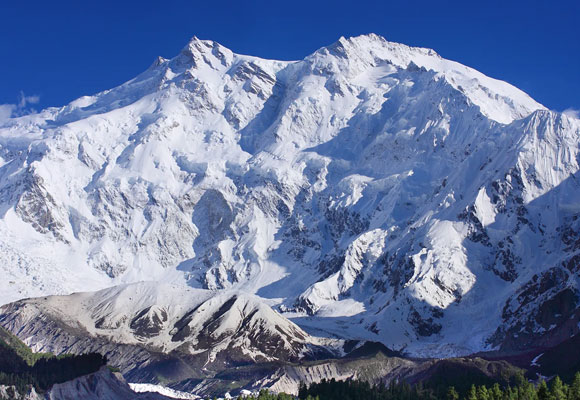
Nanga Parbat Expedition (8126m)
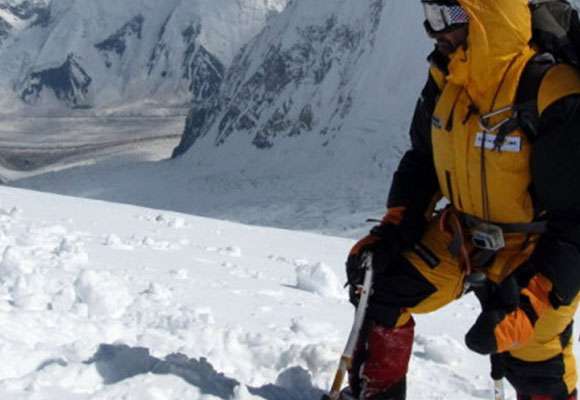
Broad Peak Expedition (8047m)
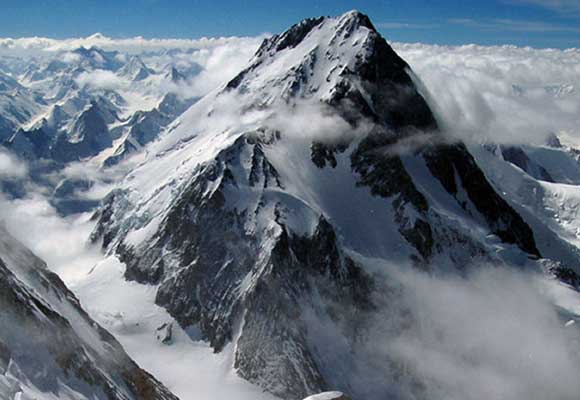
Gasherbrum 1 Expedition (8068m)
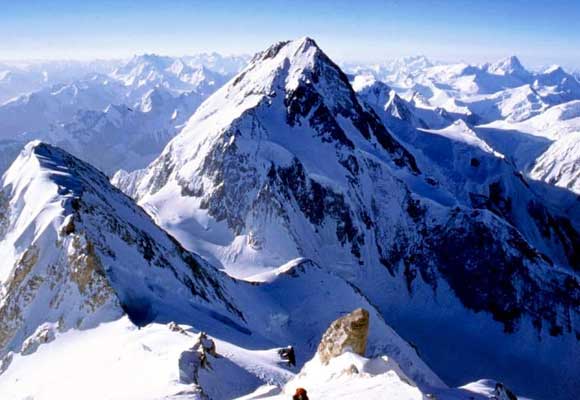
Gasherbrum II Expedition (8035m)
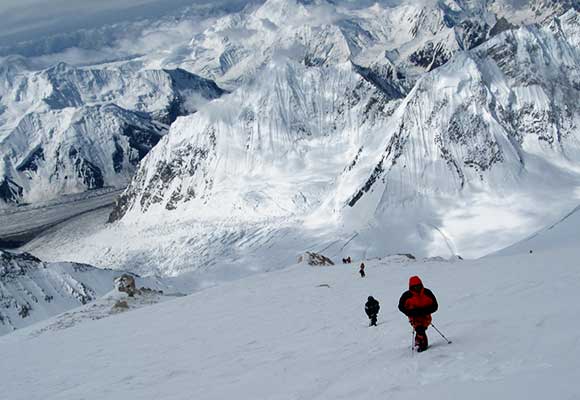
Gasherbrum III Expedition (7952m)
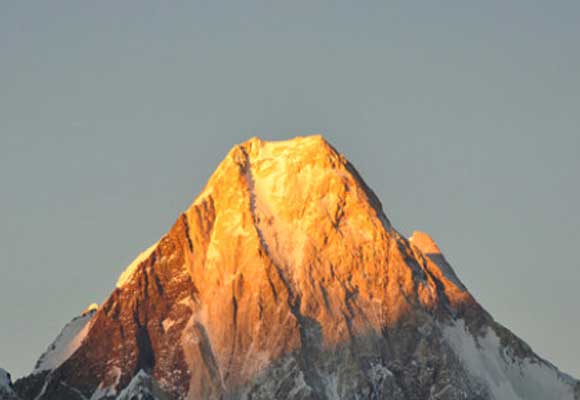
Gasherbrum IV Expedition (7925m)
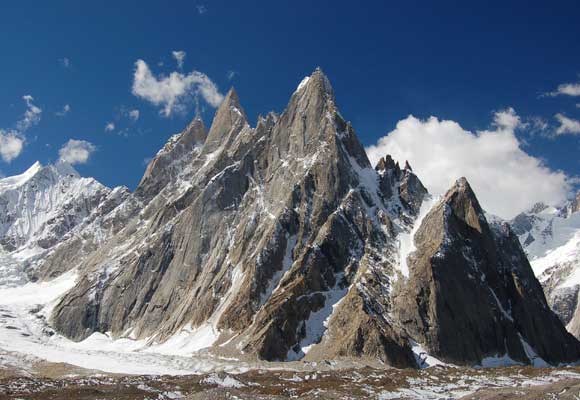
Masherbrum Expedition (7821m)
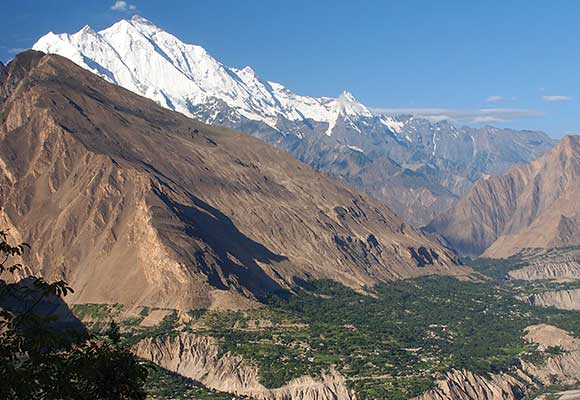
Rakaposhi Expedition (7788m)
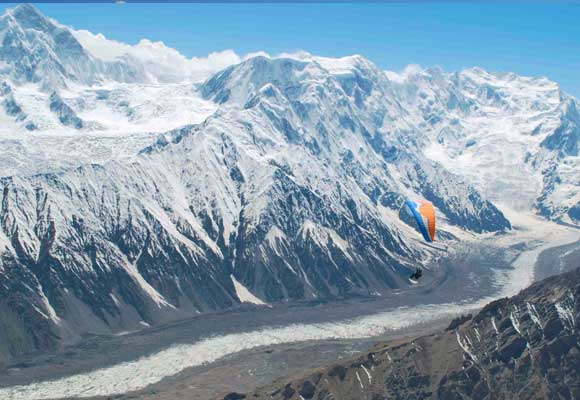
Batura Sar Expedition (7785 m)
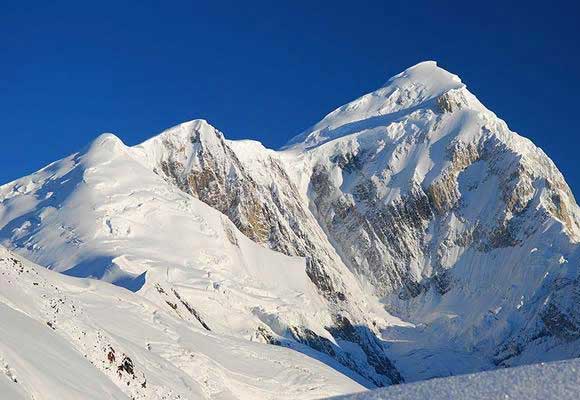
Tirich Mir Expedition (7708m)
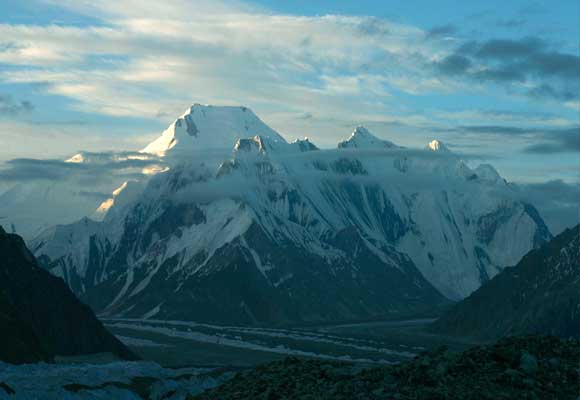
Chogolisa Expedition (7665 m)
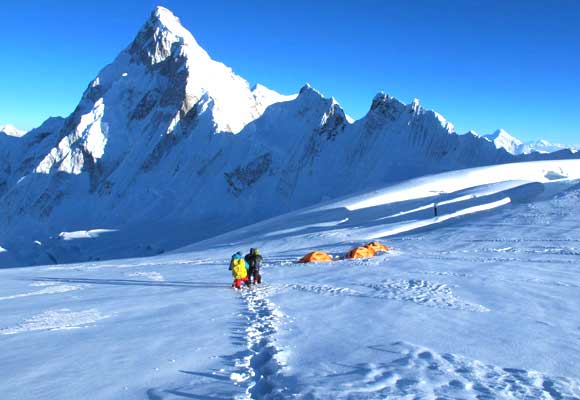
Passu Peak Expedition (7478m)
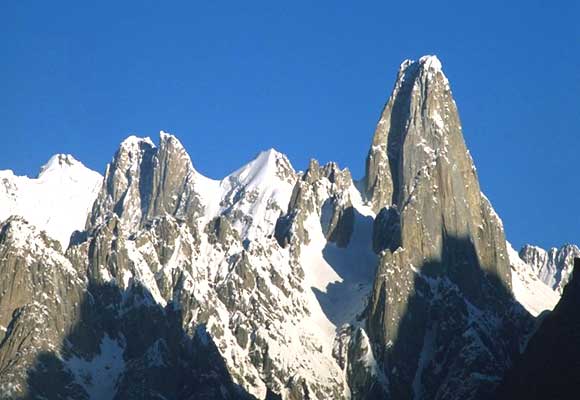
Muztagh Tower Expedition (7273m)
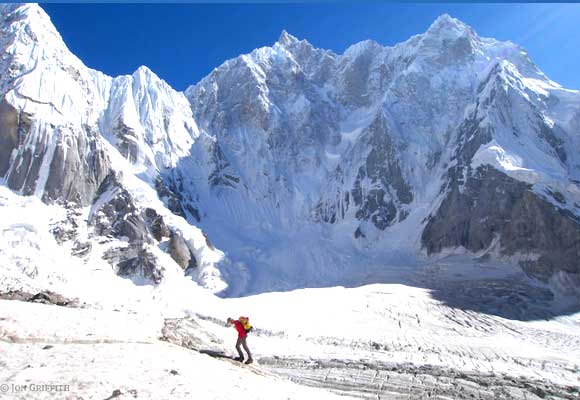
K6 Peak Expedition (6935m)
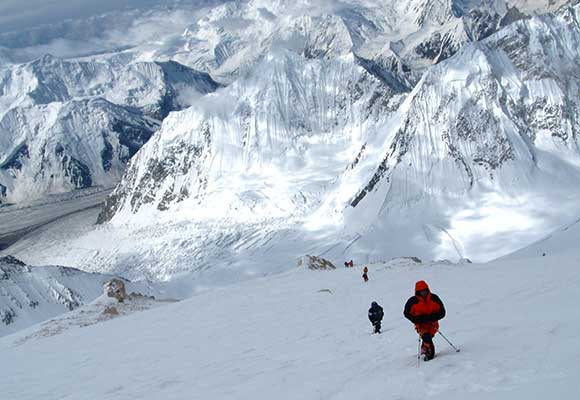
Diran Peak Expedition (7272m)
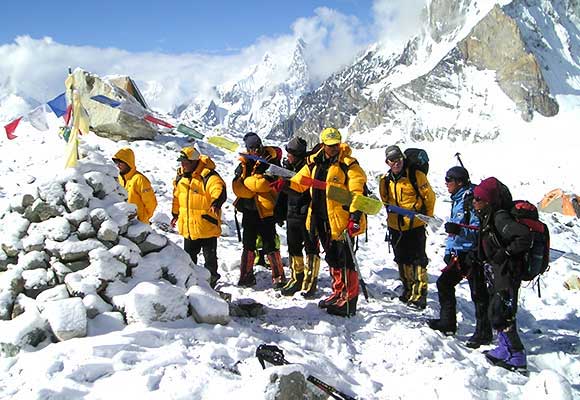
Latok 1 Expedition (7145 m)
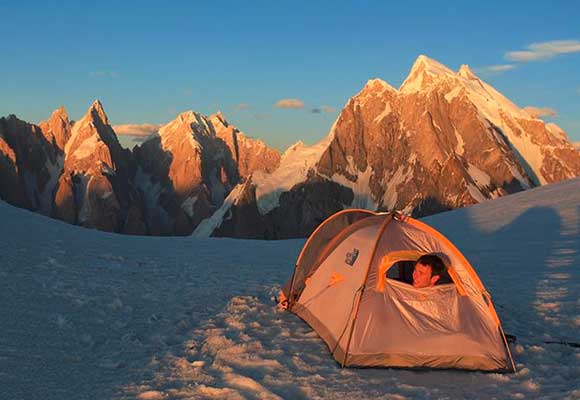
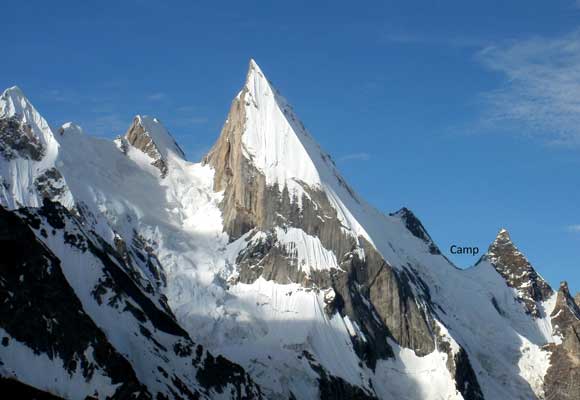
Laila Peak Expedition (6095m)
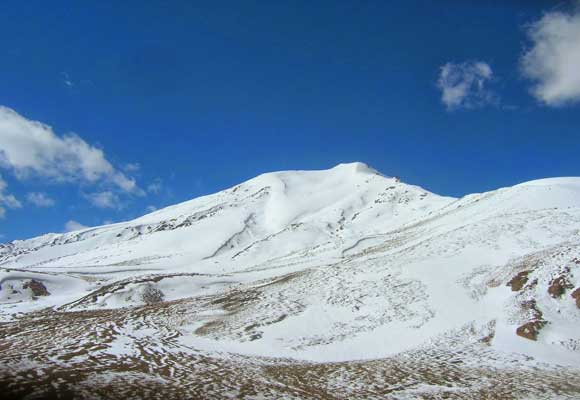
Minglik Sar Peak Expedition (6050m)
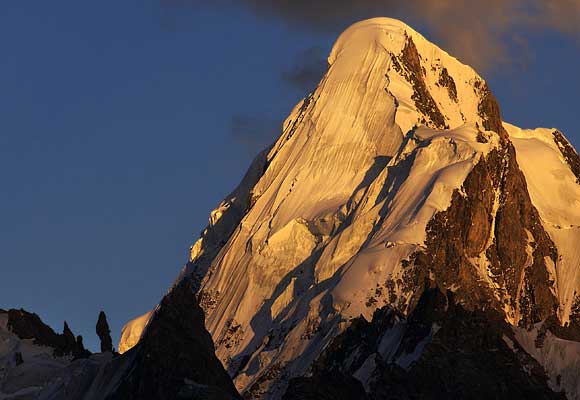
Rush Peak Expedition (5,098m)